
Transcranial Magnetic Stimulation (TMS)
FDA approved and covered by most insurances.
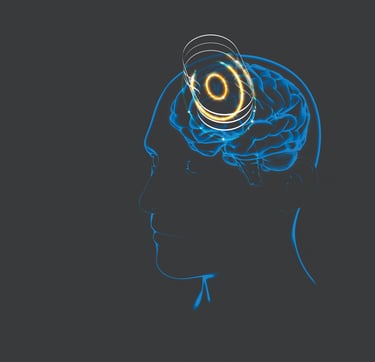
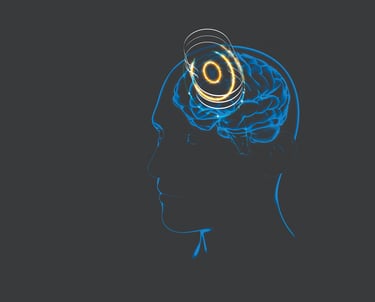
TMS is a noninvasive brain stimulation technique that uses magnetic fields to activate nerve cells in specific brain regions.
Its main clinical application is in treating depression.
Unlike electroconvulsive therapy or ECT, TMS does not require anesthesia and is generally well tolerated.
The noninvasive technique refers to the TMS procedure not requiring surgery or any cutting of the skin.
TMS is most commonly used for patients with treatment resistant depression.
TMS's clinical use is expanding into other areas of mental health and neurology.
Our providers and staff are certified in delivering TMS services.
Frequently Asked Questions
How does TMS work?
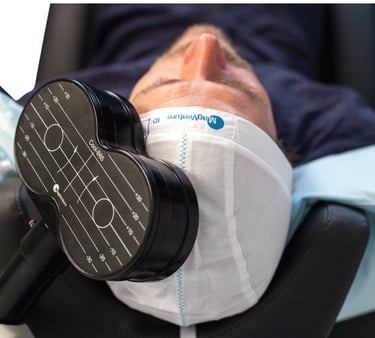
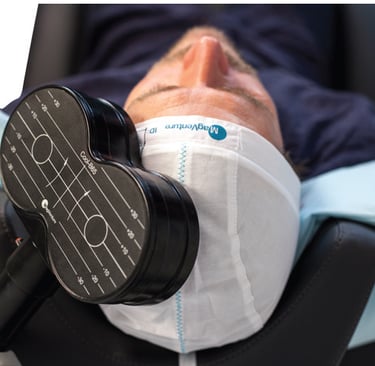
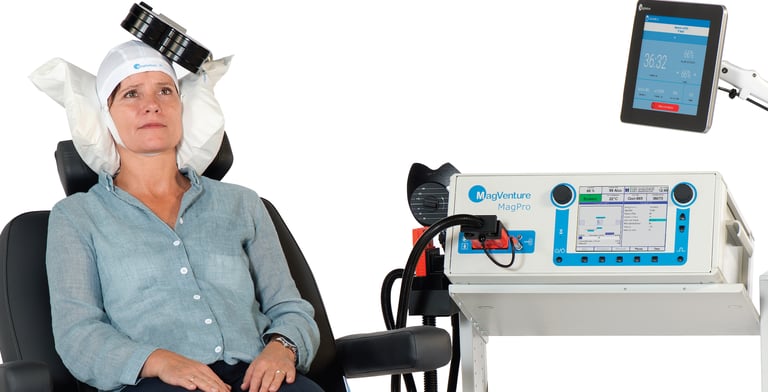
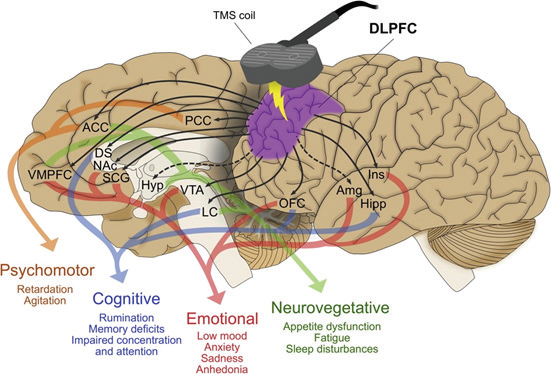
TMS works by delivering brief magnetic pulses through a coil placed on the scalp.
These pulses generate rapidly changing magnetic fields that induce electrical currents in the underlying cortical neurons, causing them to depolarize.
By non-evasively activating or modulating neuronal activity, TMS can probe brain function and induce neuroplastic changes.
Can TMS help me?
Our Providers will evaluate your medical conditions and current medication regimen to determine if you are a candidate for TMS Therapy.
TMS offers new hope for patients who have not found relief with conventional medication or psychotherapy.
It is generally well tolerated, has minimal side effects, and can be precisely targeted to specific brain regions involved in mood regulation and other key cognitive functions.
This makes TMS a valuable treatment option for conditions like treatment resistant depression with expanding applications across other areas of mental health and neurology.
Standard TMS Therapy lasts 19 to 37 minutes, offered as one treatment per day, 5 times a week over a period of 4-6 weeks. The treatment plan can be adjusted to suite patient schedules.
How many and how long are the TMS sessions?
★★★★★
How does TMS Therapy feel like and any side effects?
Patients sit in a chair in a relaxed position. When the magnetic pulses are delivered you hear a clicking sound and feel a tapping sensation on your head. Many patients are able to watch television or read during treatment.
TMS treatment is without the side efffects typically experienced with antidepressants, such as weight gain and sexual dysfunction. TMS may, for some, cause headache or nausea, but you should be able to resume your daily activities right after treatment.
Please note that TMS therapy is a medical procedure and any side effects experienced during or after receiving the therapy should be reported to your doctor.
The future of TMS?
As TMS technology continues to advance, we anticipate its use will become increasingly personalized, enhancing patient outcomes and deepening our understanding of the human brain.
Current research has the potential to expand treatments for a broader range of neurological and psychiatric conditions usingTMS.
Will my insurance cover TMS Therapy?
For Patients 15 years and older, TMS Therapy is FDA approved, and is covered by all the insurance networks that your provider is current in network with. Some insurances require a pre authorization, and our billing team will work with each patient's specific case. We also support self-pay packages for TMS Therapy.
TMS Therapy is currently not offered for patients under 15 years.
Phone: 817 431 3838, Fax: 817 431 3135
© 2026. All rights reserved.